Plyo
METRICS
Training the nervous system to produce fast, powerful movements through the Stretch-Reflex — the same involuntary mechanism that Russian scientist Yuri Verkoshansky called the "Shock Method."
Watch the method
The largest strength gains are achieved by a plyometric type training Verkoshansky called the "Shock Method" — a series of coordinated, sequential muscle-tendon actions governed by the involuntary nervous system.
Yuri Verkoshansky — Russian Sports Scientist
Stretch-Reflex
When a muscle is lengthened, the muscle spindle is stretched and its nerve activity increases. The increased neuron activity causes muscle fibers to contract thereby resisting the stretch — an automatic contraction that prevents tearing from excessive lengthening.
Eccentric → Concentric
Once the feet make contact with the ground, a rapid muscle/tendon lengthening occurs (eccentric phase), followed by a brief amortization phase, then an explosive shortening phase (concentric) — allowing the athlete to jump to maximum height.
Thermal Energy
Maximal force occurs at the eccentric-concentric changeover. SSL training focuses on achieving this changeover in the shortest time — preserving thermal energy stored within the muscle/tendon that easily dissipates when lengthening is too slow.
Strength vs. Explosive Strength
There is a distinct difference between muscle strength (maximal force) and explosive strength (max. rate of force production). Conventional muscle strength refers to the amount of maximal force that can be applied in an unlimited amount of time. Explosive strength refers to the ability to exert a maximal force in as short a time as possible — as in accelerating, jumping, throwing.
Performance in different sports is based on different displays of explosive strength. A lineman and receiver may have the same peak explosive strength but the manner in which it is achieved differs. A lineman delivers a large force at a slower velocity while a receiver delivers a smaller force at a higher velocity. Both can achieve the same peak explosive strength.
A combination of resistance and plyometric training has been shown to have a better effect on athletic ability and performance than either method alone.
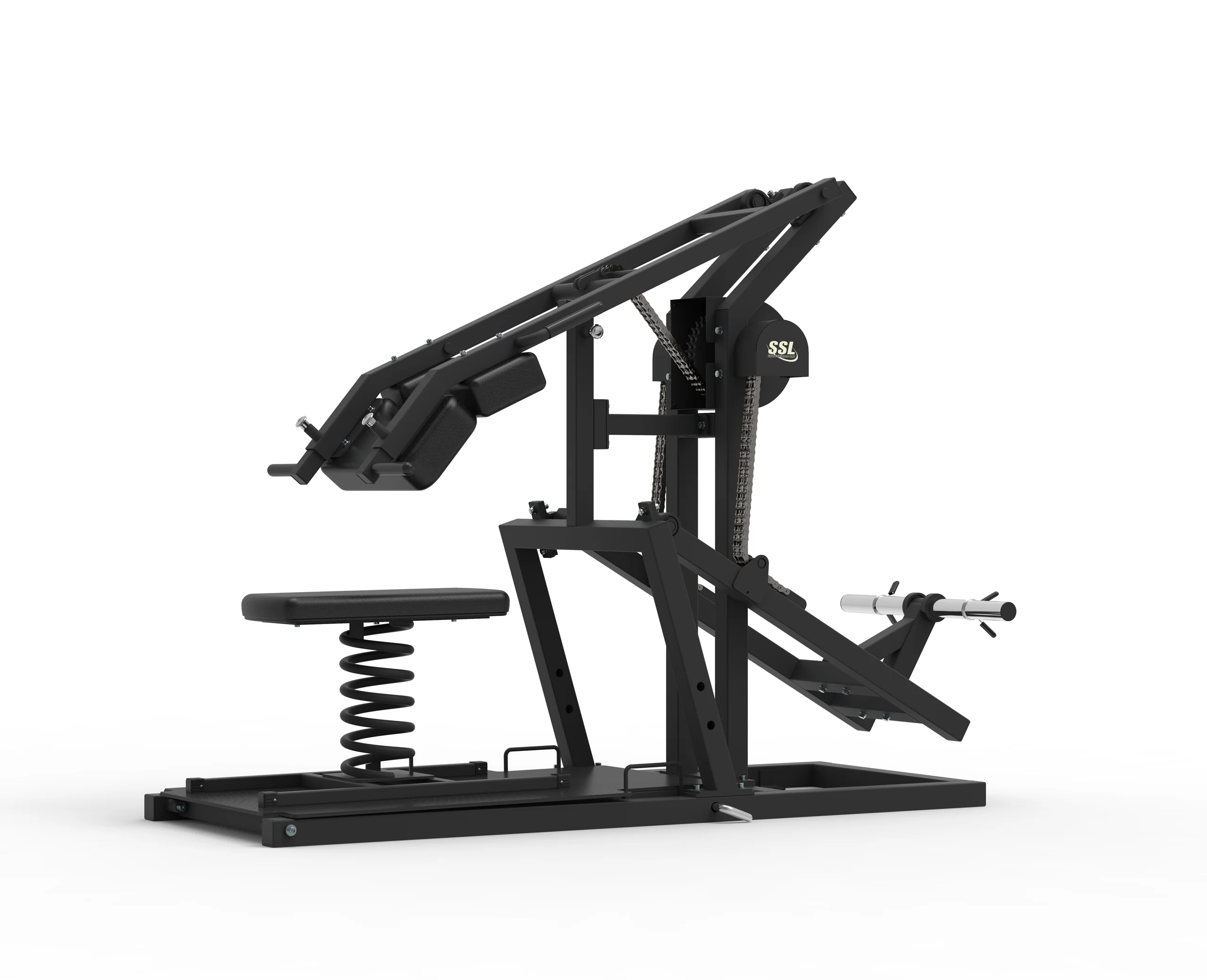
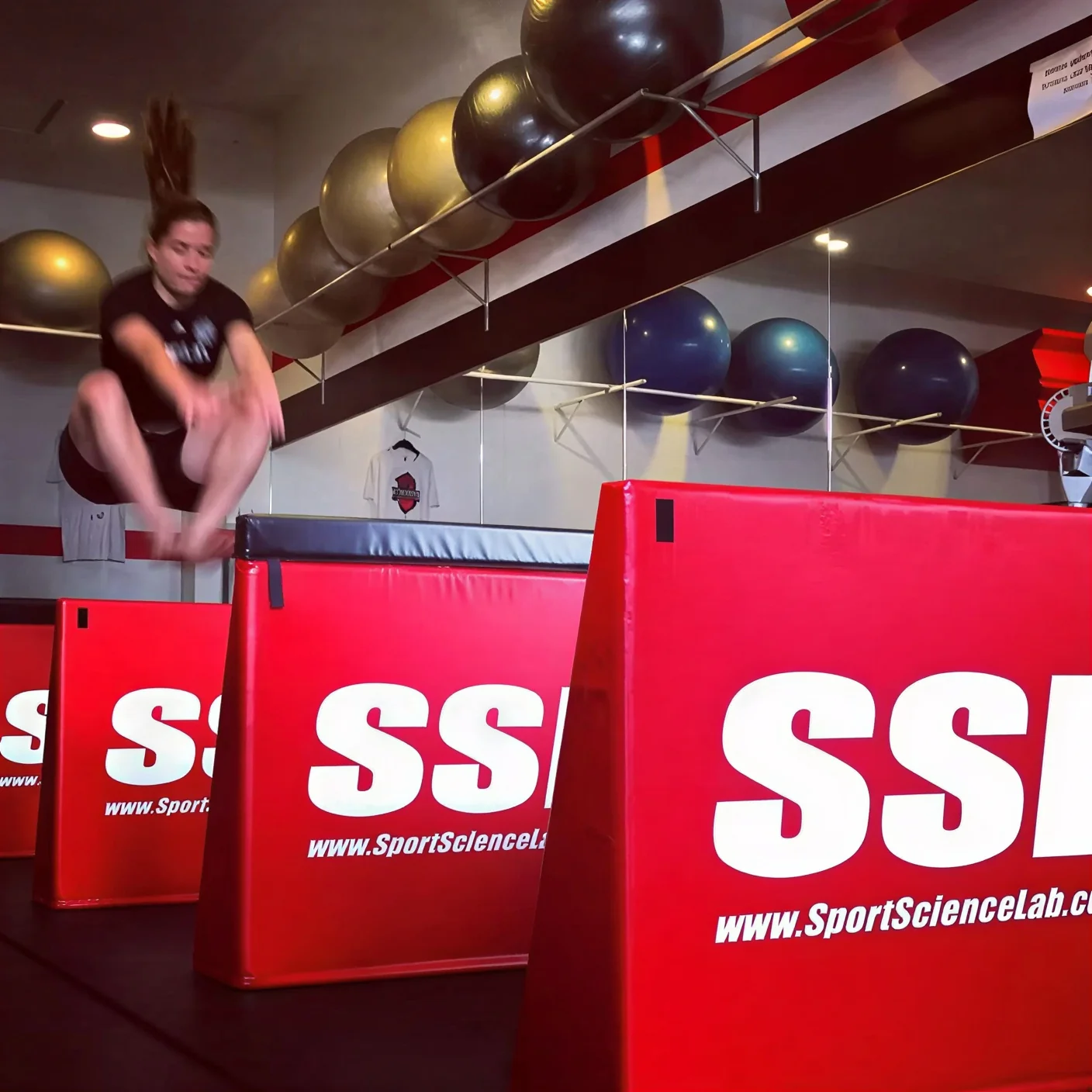
By training our athletes on the Supercat machine we address both force and velocity in the ratio applicable to the athlete's sport and position. An athlete is required not only to move a specific load but also throw the weight off during a functional movement — addressing both the resistance and plyometric training component simultaneously. Hurdle and box drills are also incorporated to ensure athletes can move their own body weight at optimal speed.
The Plio
Previously Supercat
The Plio machine was designed specifically to train athletes in the stretch-shortening cycle under load. It allows athletes to move a specific load and throw the weight off during a functional movement — addressing both resistance and plyometric training simultaneously.
By training on the Plio, athletes develop both force and velocity in the ratio applicable to their sport and position — bridging the gap between the weight room and the field.